Wednesday, 18 January 2017

Film titles

Film titles
When analysing various film titles, I noticed that there is often a connection between the title and the storyline of the movie. Lost is the American television series is about a group of survivors of the oceanic flight 815, which went 1,000 miles off course and crashed on a lush, mysterious island. The title looks faded, which almost reflects the survivors faded existence to the outside world, as they drop out of contact. The faded white writing also looks ghostly, which could be a way of exemplifying to the audience that their loved ones and other people have probably pronounced them dead, meaning they are now thought of as 'ghosts'. Lastly, the title is written in large capital letters, which almost replicates an 'S.O.S' sign that most people use when they are in danger and in need of help. This is a good way to give the audience a clue of the storyline. The adoption of editing within this title works well as it suggests to the audience that this is going to be a hard and intense journey for the characters to get to safety, as they have already partially 'faded' out of existance.
Shaun Of The Dead is an action/comedy thriller, which is about a zombie apocalypse that breaks out in a small town in Winchester. The movie focuses on the survival of the un-effected. From the title, it is clear that it links to the story line. For instance, the writing has an effect on it which almost looks as if it's decaying. This reflects the decaying state of the zombies, due to them rotting from being dead. It could also be interpreted as blood splatters across the title, this is also effective as it brings an eeriness to it and intrigues the audience. The film title also incorporates a hand that looks as if it has come out from under the ground and wants to capture/kill the audience. Once again, this reflects the storyline and interests the consumer/audience. Overall, this is an effective logo as it is unique and is a clever reflection of the storyline.
The film title of 'Psycho' is quite similar to the other titles I have analysed, due to the design of the word reflecting the story line of the movie. This psychological thriller is the tale of a woman on the lam, (Janet Leigh) who checks into the mysterious Bates Motel. Norman Bates, the co-owner, starts to show psychotic behaviour and begins to kills his guests. The title is a perfect representation of Bates' irrational mind. The word 'psycho' split in half could represent how the characters corpus callosum no longer functions, meaning the two hemispheres of his brain cannot connect to make rational decisions. Therefore, he can not tell right from wrong and commits crimes as a result. This title is a simple, yet effective, way to capture the audiences attention and give a taster of the movie plot. This would also interest the audience to know that the main character is completely psychotic, as it captures their undivided attention. One aspect of this title we would like to employ is the sybliminol message of the split word 'psycho', and how it represents the mental state of the main character. This is something very different to other film titles and would impress the audience. 

SAW is a popular horror movie. The story line of the movie is about two men realize they've been trapped by a sadistic serial killer nicknamed "Jigsaw" and must complete his perverse puzzle to live, flashbacks relate the fates of his previous victims. When analysing the film title, I saw similarities to the plot and the title. The writing looks similar to rotting flesh, which represents the flashbacks of the previous victims of the serial killer. There are lines that scratch across the writing, which could symbolise how the victims are trapped and are trying to escape, which is usually shown through scratches on the walls. Lastly, the colours used attract the audiences attention, especially fans of horror movies. Dark and grungy colours often represent a negative storyline, death and horror. If my group were to make our own film title, we would like to incorporate the dark colours due to it being a crime thriller, this means it represents our genre and catches the audiences attention.


Thursday, 5 January 2017

Location research

Location Research
For the location of our thriller, we decided we wanted to film in the 'comfort' of one of our houses. This is because it makes the audience feel as if the victim is in a safe place before the break in, this intrusion will aid in interesting the audience and building suspense as it makes them feel as if they aren't safe anywhere. When putting together our storyboard, we came to a consensus that we wanted our scenes to take place in bedrooms, the kitchen and the garden. We also need props such as beds, a weapon, a wardrobe and ladder; meaning the inside of a home is the best fit for our location choice. 

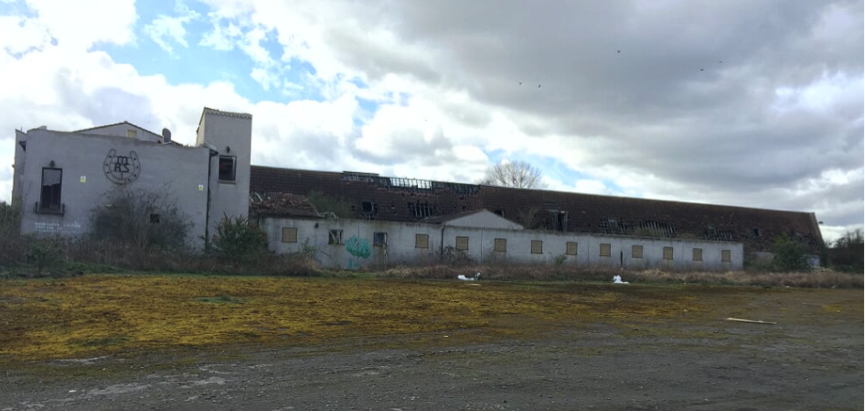
Although we finalised this decision, we also primarily discussed filming it at an abandoned warehouse that we are all familiar with, however, we decided against this due to the open roof of the building, meaning we would have to work around weather patterns. As well as this, the warehouse is often vandalised and broken into, meaning we would be interrupted during filming. Another negative of using this building is that it's very unstable and we could easily get hurt during filming, due to holes in the top floor. One positive of using this location would be the dark and creepy mise-en-scene, which would be perfect in creating a tense atmosphere.

Another reason to why we chose a house is because we are basing our ideas of existing thriller movies such as Taken and The Call, in these movies the climax builds within the comfort of people's homes, making the audience feel invaded and vulnerable which ultimately creates a thrilling atmosphere. We didn't want to risk changing the location to something that's more unique to the existing movies because we risk displeasing our audience.

When discussing who's house to use we wanted to use one that had an open planned floor space, meaning it would be easier to work with camera angles and shots. As well as this, we also wanted to pick one that would be available at most times so we are able to be flexible with our filming schedule. Another positive factor of using a house is that we can use natural or artificial lighting. This use of mise-en-scene will be helpful in making our thriller the best it can be, as lighting is an important factor in setting the tense atmosphere.

⇒Our first location idea:
 The area is dark, scary, but holes in ceiling make it hard to film and are also dangerous.
 People breaking in to explore the building means we would be interrupted from filming.
 The area is abandoned and creepy, making it perfect for a thriller.
However, it gets dark very easily, meaning we would need to film only during the day. We also found that using artificial lighting doesn't make much of a difference in this dark building and it causes the camera shot to be blurry.

⇒Our second location idea: 
This is the floor plan for the house, it has various rooms to choose from, hallways, stairs, a kitchen and is furnished with the props that we will need. This means we will be able to follow our storyboard accurately. 
The location means we can use natural or artificial lighting, it will be available at all times to use, it won't be affected by weather conditions and it's also on a quiet street, meaning passing cars won't affect our audio.


Initial Responses

Initial Response Questionnaire

When we pitched our initial ideas to the class, we did not get positive feedback. Many people believed that our ideas were quite stereotypical and predictable. At the time, we wanted to bring some elements of horror into our crime thriller, this was because we wanted a unique aspect to it that was different from the usual crime thriller genre.  However, from this feedback we realised that this would distract us from our main goal and would make it hard for our audience to identify what kind of thriller they were watching.

In regards to locations, we initially wanted to film outside. Not only would this be difficult (because of unpredictable weather),but we also got feedback that this does not relate properly to the crime thriller. When filming in forests, there are usually dead bodies found. But because we was filming from before the crime took place, it meant that this location didn't fit in to our story line. Our audience also suggested that this is quite a predictable location for a thriller opening, and so we decided that filming in a house would be more convenient and a bit more unique.

The next aspect of our initial ideas was sounds. When it came to sound effects, we were very careful  as to what ones we wanted to incorporate, as this often has a significant impact on how successful the genre is presented/portrayed. At the beginning, we wanted to incorporate screaming sound effects, but after consideration we decided that this was too similar to the horror genre and is also over-used and predictable. However, one aspect of sound that we wanted to use was silence. We used this within the last part of our thriller opening and it was a good way to build suspense and tension (which I also identified in the thriller, 'The Sixth Sense'). We also used high pitch sounds in order to scare the audience at times of powerful shots.(Such as when the intruders face is shown, and when the victim gets dragged away). When we pitched this idea to our target audience, they believed that it was too typical and predictable. Although the audience believed we should change it, we decided to keep it. This is because it is used in many crime thrillers and we know from our own experience how powerful it is in building tension. Once our thriller was complete, our audience agreed that this worked well.

Lastly, our audience primarily said that the victim hiding inside of a closet is over-used. We agreed with this and decided to bring in an unexpected twist instead. To do this, we made it look like our victim had escaped out of a window, and the intruder would leave the house thinking he had failed his mission. However, we then shocked the audience by panning the camera underneath the bed, where the victim was really hiding. The victim then thinks she is safe, before getting dragged away in a violent manner from under the bed. This made it more unique to other AS crime thrillers.


Overall, although most of our feedback was negative, we were able to use this to make an even better thriller. This was done by both changing our ideas, and keeping them the same. The end result received a lot of positive feedback because of this. 

Wednesday, 4 January 2017

Final StoryBoard


Overall Ideas/Pitch

Overall Ideas
These are our overall ideas for our Prezi

Initial ideas

Initial ideas
For our initial ideas my group and I put together a Prezi

Storyboard

 Storyboard

When deciding on ideas for our thriller we originally thought of a stalking storyline, however, we decided to change this due to its stereotypical aspects. After discussion and watching other thrillers, we chose this story line, as we believe it has key elements of a thriller.To begin our thriller, we decided to create a welcoming atmosphere for our audience. This will enable us to single-handily build the tension and overall increase their fear, rather than going straight into an ambiguous scene in which the climax has already occurred. We decided we would do this by starting the scene in an innocent girl's room, this is usually quite stereotypical of a cheesy thriller opening, however, after inspiration from popular thriller movies (such as 'The Call' and 'Taken'), we decided this is the best way to build the climax. Additionally, we are going to have the girl on the phone to one of her friends, who will later guide her safety. In the next scene, we chose a long shot or close-up shot of an intruder standing outside of the window of the homeowner's house. We will cut from the intruder looking into the girl's kitchen to a behind shot of the intruder looking in. We want to incorporate this use of camera shots as it suggests to the audience that he is going to break into the house and therefore, something bad will occur. Next, the intruder will attempt to break in. We will use a close-up shot of the intruder attempting to open the back door. This will be made clear with the use of diegetic sound of the doors rumbling. The scene will then switch to an extreme close-up of the young girl's concerned face. She will tell her friend on the phone that she will return momentarily whilst she investigates the noise. A long shot will then be used to show the young girl at the top of her stairs, this long shot will exemplify her empty surroundings so that the audience is once again reminded that she is alone. Once she is aware of a break-in, non diagetic sound will be employed to build tension as it reflects her panicking. The victim will inform her friend on the phone that she is now not alone in the house and she is told to hide under her bed. The intruder then begins to search for the girl, mid-shots of the man walking past personal expensive possessions in the house shows the reader that he is not there to steal and is instead there to find the girl and kill her. This is important as it provides tension for the thriller as the audience knows there is no escape for the girl. 
The scene will then cut to the intruder looking through wardrobes, closets and other rooms of the house to find the girl. His determination to find the girl builds tension as it increases his anger and makes it seem as if the girl is in more and more danger the longer he has to wait to find her. To trick the intruder, the victims' friend on the phone is going to tell our character to put a ladder outside of the window in order to make the intruder think she has already escaped. As the intruder goes to leave we wanted the girl's phone to read, or perhaps a diegetic sound of the girl making a noise whilst trying to get back under the bed. The girl starts to think she is safe until she is dragged from under the bed. An extreme close-up of the girl's face will be used to express her fear and exemplify her fate.